
Days after Moody's cut its gross domestic product (GDP) forecast for financial year 2022-23 (FY23) after the official GDP print for the June quarter came in lower than expectations, the global ratings agency said it would maintain its long-term sovereign debt credit rating and outlook on Asia's third-largest economy. "The credit profile of India reflects key strengths, including its large and diversified economy with high growth potential, a relatively strong external position, and a stable domestic financing base for government debt," Moody's said on Tuesday. "We do not expect rising challenges to the global economy, including the impact of the Russia-Ukraine military conflict, higher inflation, and the tightening financial conditions on the back of policy tightening, to derail India's ongoing recovery from the pandemic in 2022 and 2023," it said.

The Centre has garnered around Rs 2,500-3,000 crore in the first five weeks after it imposed a windfall tax on oil and gas companies for the export of fuel, Business Standard has learnt. It is likely that the government will continue with the one-time tax till the Indian crude basket is above $80 a barrel, sources said. The next review of the windfall tax on oil companies is early next week.
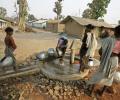
In May, Satpal Singh, who runs a dairy business with three buffaloes in Jewar, near Noida, was worried about the steep spike in input costs. Singh said dry fodder rates, which cost Rs 1,500-2000 per tractor trolley last year, were quoting at Rs 4,500-5,000. The price of other cattle feed ingredients (that include mustard meal and similar mixes) had also gone up from Rs 2,000 per quintal to Rs 3,100-3,200 per quintal.

After becoming active over the rice-growing Indo-Gangetic plains, the southwest monsoon might witness weak phase for the next 3-4 days over the already rain-deficient region. So far, the main deficit states are Uttar Pradesh (-42 per cent), Bihar (-36 per cent), Jharkhand (-48 per cent), and West Bengal (-24 per cent). According to private weather forecasting agency Skymet, rains in west UP, Punjab, Haryana, Bihar, and Jharkhand are expected to be weak in the next 3-4 days before again picking pace.

India's plan to produce ethanol from second-generation (2G) sources -- mainly farm waste -- is taking time to materialise even as the government is set to dedicate to the nation on Wednesday a Rs 900-crore plant set up by Indian Oil Corporation (IOC) in Panipat. Though state-run oil companies had decided to set up at least 12 plants in 2016-17 with an investment of around Rs 10,000 crore, this will be the first unit coming on track while others are stuck in various stages owing to issues like capital expenditure, lack of feedstock, and high rates of finished products compared to traditional ethanol units. According to industry sources, three more second-generation plants are coming up.
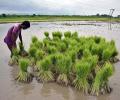
The area under paddy - the biggest foodgrain during the kharif season - was almost 13 per cent lower in the week ended August 5 as compared to the same period last year despite a slight pick-up in rains in the main growing regions, triggering fears of a 10-12 million-tonne drop in final output. Sources said with the peak sowing season for paddy almost coming to an end in the big-growing states, any uptick in coverage from here onwards may not give the desired yields. With 30 per cent of normal average area in which paddy is grown every year remaining unsown till early August, there is a limited chance of a big uptick in output, trade and market sources said.

The Centre's capital expenditure (capex) outlay for the April-June quarter (first quarter, or Q1) of 2022-23 (FY23) could be close to Rs 1.5 trillion, Business Standard has learnt. As a percentage of full-year capex Budget Estimates (BE) of Rs 7.5 trillion, this could be at similar levels to the trends in the past few fiscal years. It is in the July-September quarter (Q2) of FY23 that capex is expected to pick up, when a bulk of the long-term capex loans to states are expected to be expended.

Centre's move to form a 29-member panel on making the minimum support price (MSP) mechanism effective and keeping three positions vacant in it for SKM representatives has triggered strong disapproval from it.
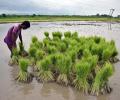
Trade and market players have already started factoring in at least 10 million tonnes drop in production in rice in the kharif season as compared to last year due to delayed sowing.
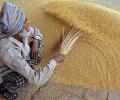
A head of its meeting, the Reserve Bank of India (RBI) can take some solace from the softening food commodity prices. However, the events surrounding the last few weeks show that the fall may not be uniform across all commodities, and cereals like wheat and rice could be the outliers. A Reuters report said that local wheat prices jumped to a record Rs 23,547 per tonne on Wednesday. That is a 12 per cent rise from the recent lows that followed the government's surprise ban on exports on May 14.

'It is building the country's infrastructure, and delivering it very efficiently.'

Nearly eight months after the government repealed the three controversial farm Acts, it has constituted a high-powered panel under the chairmanship of former agriculture secretary Sanjay Agarwal to make the minimum support price (MSP) mechanism more effective and transparent as promised by Prime Minister Narendra Modi in his televised address announcing the repeal. The names of three members from the Samyukta Kisan Morcha (SKM), the main grouping that spearheaded the year-long agitation at Delhi's borders, have been withheld, pending receipt by the government, stated a gazette notification. NITI Aayog member Ramesh Chand, Indian Institute of Management-Ahmedabad Professor Sukhpal Singh, Indian Farmers Fertiliser Cooperative chairman Dilip Sanghani, secretaries of the Departments of Agriculture, Indian Council of Agricultural Research, Food and Consumer Affairs, Cooperation and Textiles, along with representatives from the state governments of Karnataka, Andhra Pradesh, Sikkim, and Odisha will also form part of the panel.

While the experience of summers has been uncomfortable, the actual readings on thermometers may cause wonder about the exaggerated discomfort. This is what meteorologists call 'real feel temperature' or 'real feel heat'. Sanjeeb Mukherjee explains.

During his first Union Budget in July 2014, former finance minister Arun Jaitley announced the setting up of an institution called 3P India, with an allocation of Rs 500 crore. The intention was to mainstream public-private partnerships (PPPs) in India. The plan was to bring together the capacities of the government and private sector to push PPP projects.
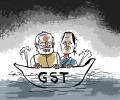
Agra has long been known for the Taj Mahal, but it is also a manufacturing hub filled with micro, small and medium enterprises (MSMEs) that make everything from electronic components to metal products, from paints and chemicals to footwear. And five years after the introduction of the Goods and Services Tax (GST), the MSMEs here complain that while the indirect tax regime has been transformative, cutting out the need to file multiple taxes, its biggest drawback has been the delay in credit refunds. Whoever you speak to - MSME owners, tax lawyers, or industry bodies like the National Chambers of Industries and Commerce (NCIC), Agra Footwear Manufacturers and Exporters Chamber (AFMEC) and Agra Shoe Manufacturers Association (ASMA) - they all emphasise that the GST continues to face some key challenges.

With the cooling down of heatwaves as the monsoon spreads across the country, power demand has fallen by 12.5 per cent from the start of this month till Monday. Peak power demand of the country had touched a record of 210 Gw last week, mostly due to rising temperatures and opening up of the economy. Compared with the beginning of this month, almost all states have seen a fall in power demand. Punjab, however, is an exception where the power demand on Monday was 17 per cent higher than on June 1.
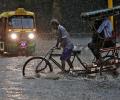
It's still early days, but the southwest monsoon has been nearly 37 per cent 'below normal' in the first seven days (June 1-7) of this month. According to the data furnished by the India Meteorological Department (IMD), between June 1 and June 7, India received 14.5 millimetres (mm) of rainfall, against a 'normal' 23.1 mm. Among places where rains have arrived, monsoon in Kerala in the first seven days has been 48 per cent 'below normal', while in Puducherry, it has been 56 per cent 'above normal'. In Tamil Nadu, rains were 21 per cent 'above normal' between June 1 and June 7.

Union finance secretary T V Somanathan recently said the Centre had saved Rs 10,000 crore in FY22 on interest payments after adopting new accounting mechanisms for central government agencies and centrally sponsored schemes (CSS) for state governments. Speaking at an event, Somanathan said due to these, there was an unspent balance of Rs 1.2 trillion with state agencies from CSS as on March 31, 2022. This means this amount will be reduced from the Centre's borrowing for now and it can be considered a short-term saving for the exchequer.

Prime Minister Narendra Modi and chief ministers of states may soon have an in-person interaction on a common platform for the first time since 2019. The seventh meeting of the Governing Council of NITI Aayog is likely to be held in late June or early July, Business Standard has learnt from sources in the Centre and a state. While the date and other details are yet to be finalised, it is learnt that there will be a conclave of chief secretaries of states and Union Territories in Dharamshala, Himachal Pradesh, on June 14 and 15, which will decide the agenda of the Council meeting to be held at a later date.
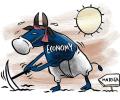
Around 31 million households have demanded work under the flagship MGNREGA in the month of May this year, which is almost 11 per cent more than the same period last year and much higher than the corresponding pre-Covid period, data sourced from the website showed today. In April 2022, around 23.26 million households have sought work under the scheme which as per the provisional data for May has risen to almost 31 million households. The April 2022 work demand was almost 11.15 per cent less than the corresponding period of April 2021.
 © 2026 Rediff.com - Investor Information - Advertise with us - Disclaimer - Privacy Policy - Sitemap - Feedback - About us - Terms of use - Grievances